Large landscapes are rarely forgiving. A system that looks fine on paper can still waste significant water once it meets uneven slopes, mixed plant material, variable sun exposure, and changing pressure conditions across the site. That is why irrigation performance should be treated as an engineering problem, not just an equipment choice. In large-scale settings, the difference between efficient watering and chronic waste is usually found in the quality of the design.
For property owners, managers, and developers, the real challenge is not simply delivering water. It is delivering the right amount, in the right place, at the right time, with enough flexibility to handle real-world conditions. That is where smart irrigation design becomes strategically valuable. With the right planning, the system can respond to soil conditions, weather, pressure changes, and landscape needs instead of operating on a fixed assumption.
Colorado Outdoor Environments approaches this work as a specialized design and management discipline. With decades of experience supporting Colorado properties, the company builds irrigation systems around site-specific requirements rather than generic templates. That distinction matters, especially when the landscape is large, expensive to maintain, and expected to perform year after year.
Why Large Landscapes Waste Water Even When the System Is Running
A major misconception is that water waste only happens when a system is broken. In reality, waste often begins much earlier, inside the design itself. A system can be fully operational and still overwater one zone while underwatering another. On large properties, those small inefficiencies multiply quickly.
The most common causes are usually structural, not cosmetic. Long pipe runs, mismatched sprinkler heads, improper zoning, uneven elevation, and pressure loss all influence how much water actually reaches the plant root zone. When those variables are not accounted for during design, irrigation becomes inconsistent. The result is runoff, overspray, pooling, stressed plant material, and avoidable operating costs.
Smart design addresses the root issue. Instead of assuming every area of the property needs the same treatment, it separates zones by plant type, exposure, hydraulic demand, and soil behavior. That is the practical difference between a system that merely functions and one that actually conserves water.
The Hidden Cost Of Poor Hydraulic Planning
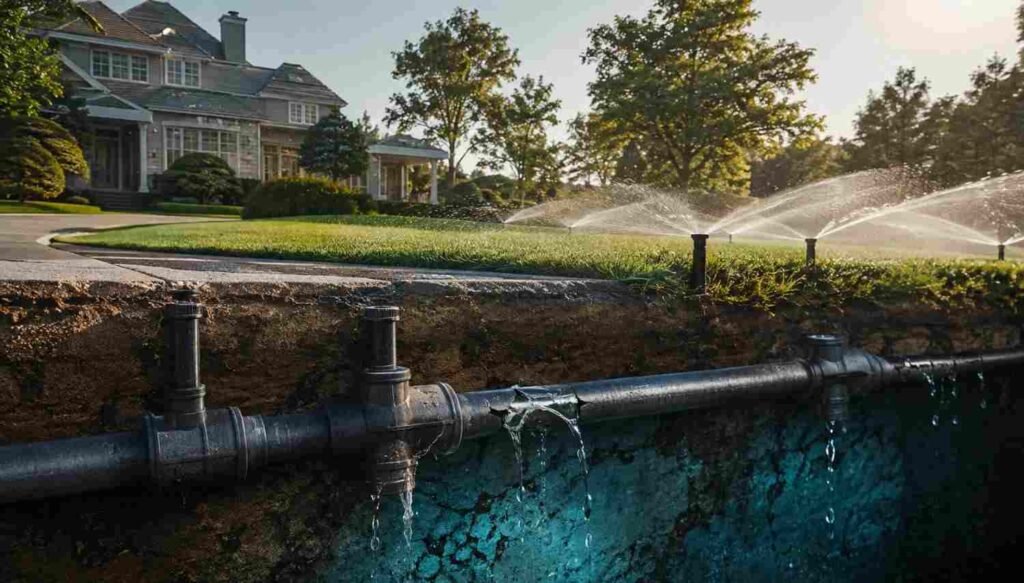
Hydraulics are often invisible to the casual observer, which is part of the problem. If pressure drops too far in one section, coverage becomes uneven. If pressure is too high elsewhere, misting and atomization increase, which means more water drifts away before it can be absorbed.
Colorado Outdoor Environments emphasizes hydraulic planning because large landscapes are especially sensitive to these imbalances. A system that ignores pressure and flow realities may appear active while still wasting water through overapplication or corrective runtime increases. That is not efficiency; it is compensation for a flawed layout.
What Smart Irrigation Design Actually Changes
Smart irrigation design is not simply about adding technology to an existing system. It starts with better decisions at the design stage, then uses technology to make those decisions more responsive over time. The goal is to create a system that matches water delivery to actual site demand, not to a fixed schedule.
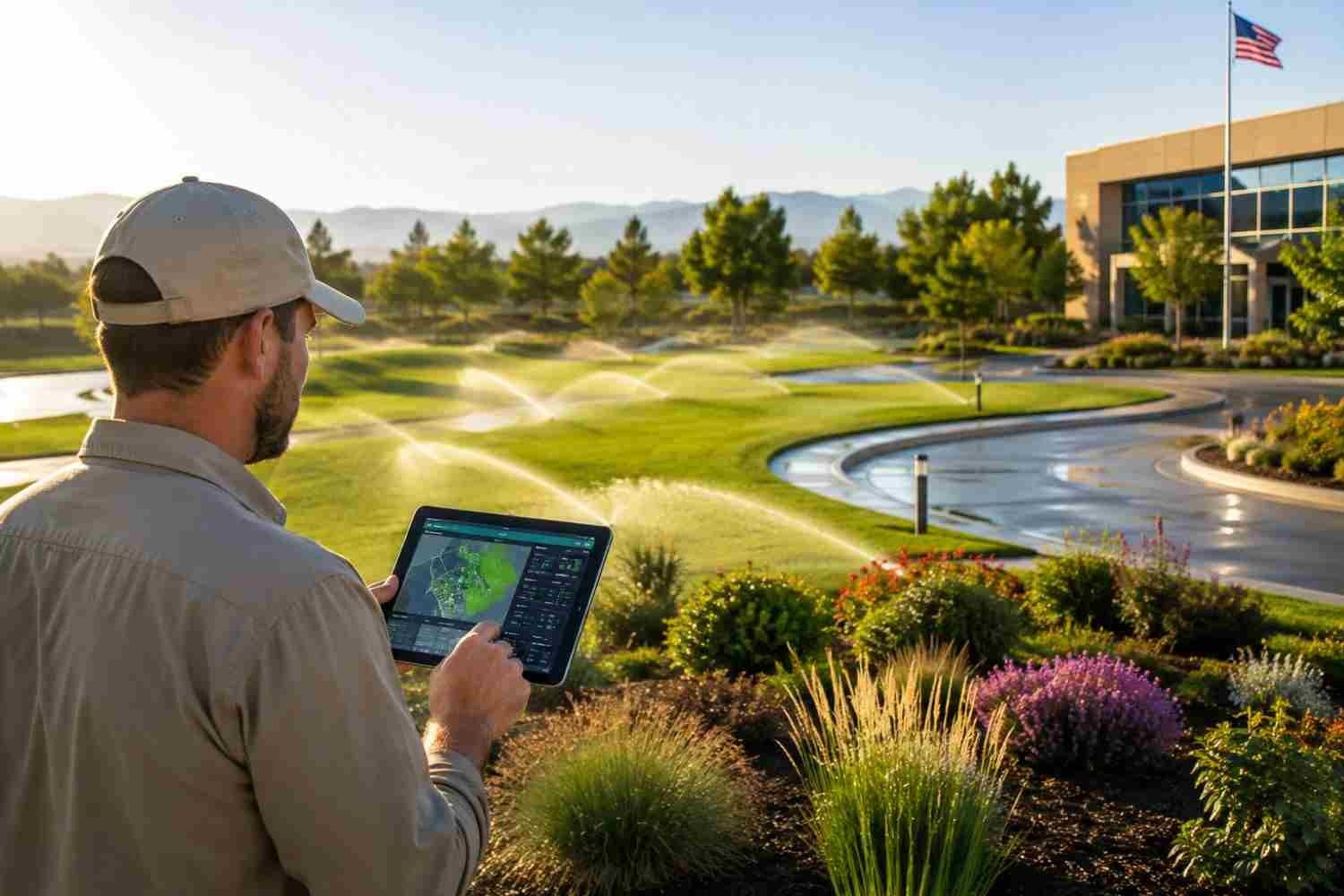
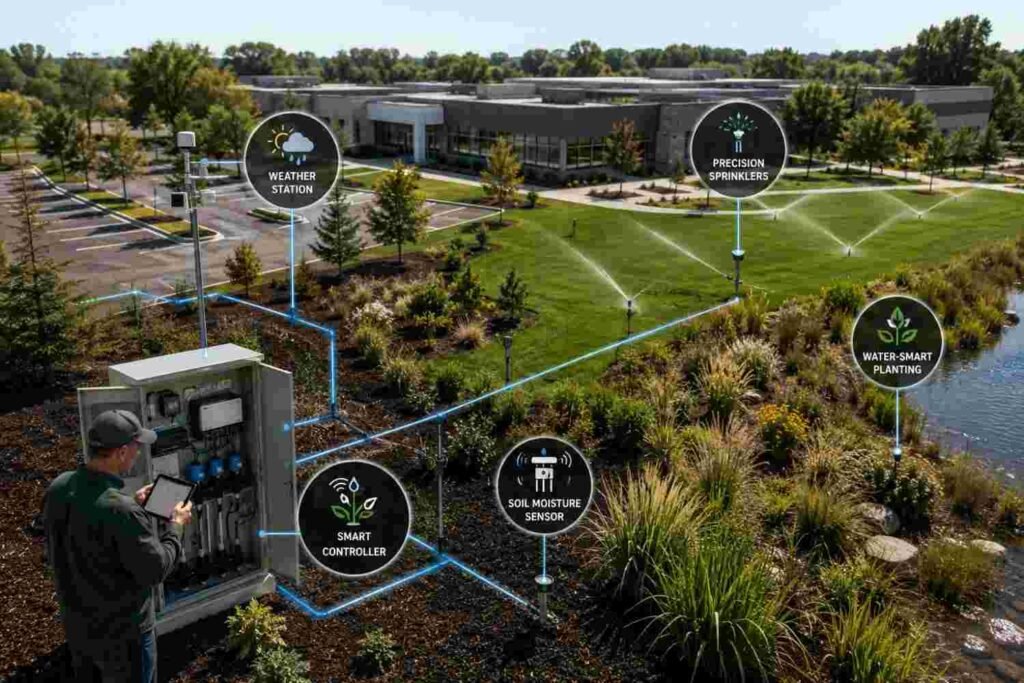
A well-planned system can incorporate soil moisture sensors, precipitation sensors, and real-time flow and pressure monitoring. Those tools are useful because they provide feedback the system would not otherwise have. If the soil already contains enough moisture, the system can avoid unnecessary runtime. If a line breaks or pressure shifts unexpectedly, the system can notify the operator instead of quietly wasting water for hours.
For complex properties, that kind of intelligence is not a luxury. It is operational control. It allows managers to make informed adjustments instead of relying on seasonal guesswork or broad irrigation assumptions.
Sensor Data Creates Better Decisions
Sensors are only valuable when they are placed inside a thoughtful design. Soil moisture sensors, for example, are most effective when the system is already segmented by soil profile and planting need. Otherwise, the readings can be too general to guide meaningful changes.
The same is true of flow and pressure sensors. They are not merely alarms; they are diagnostic tools. When integrated correctly, they help identify abnormal usage patterns, detect failures early, and reduce the chance of large, hidden losses. Colorado Outdoor Environments uses these components as part of a broader water management strategy, not as isolated add-ons.
Smarter Scheduling Still Depends On Good Engineering
Even the best software cannot compensate for a poor irrigation layout. If zones are oversized, heads are mismatched, or drip systems are not used where they should be, scheduling intelligence only manages the inefficiency instead of solving it.
That is why irrigation design in Colorado should be understood as a design-first discipline. Smart controllers matter, but they work best when the hydraulics, equipment selection, and site logic have already been handled well. When design and technology are aligned, the entire system becomes more predictable and less wasteful.
The Design Choices That Most Directly Cut Waste
Some design choices produce disproportionate improvements because they address the most common sources of waste. In large landscapes, these decisions are usually more valuable than simply increasing technology density.
A strong design typically focuses on the following:
- Zoning by plant type, soil condition, and sun exposure
- Matching precipitation rates across each irrigation zone
- Using drip systems in areas where overspray would be inefficient
- Selecting regulated pressure components to control misting and runoff
- Planning for flow and pressure balance across the full property
- Integrating remote monitoring for faster response to system issues
These choices reduce waste because they make the system more precise. Instead of watering the entire property as if it were one uniform surface, the design treats each zone as its own water-use environment. That is especially important on estates, ranches, subdivisions, golf courses, and commercial sites, where landscape conditions often vary dramatically from one area to the next.
Colorado Outdoor Environments is built around that level of specificity. Their work spans site evaluation, water availability assessments, hydraulic system components, and installation oversight, which means the system is planned as an integrated whole rather than assembled piecemeal. This same attention to thoughtful planning can make a difference in broader home upgrades buyers notice first, where functionality and long-term value often matter as much as appearance.
Why Oversight Matters After The Design Is Complete
One of the most overlooked parts of irrigation efficiency is implementation. Even a well-conceived design can underperform if it is installed without proper coordination or if key components are placed incorrectly in the field. Large projects are especially vulnerable here because the number of moving parts is higher.
Oversight matters because irrigation systems are only as effective as their installation details. Head spacing, valve placement, sensor positioning, and pressure regulation all influence whether the design intent survives construction. If those elements drift during installation, water waste can return immediately, even if the original plan was strong.
That is one reason Colorado Outdoor Environments provides construction management alongside consulting and design. The value is not just in drawing a better plan. It is in protecting the plan through execution, startup, and system calibration.
Remote Monitoring Changes The Response Time
A hidden leak or line failure can waste far more water than a week of slightly inefficient scheduling. Remote controls and automated notifications help shrink the time between problem and response. On a large property, that time gap is often the difference between a manageable adjustment and a major loss.
Real-time visibility also helps managers make better operational decisions. Instead of waiting for someone to notice weak coverage or standing water, the system can flag abnormalities as they happen. That is one of the clearest advantages of smart irrigation technology: it does not just water more precisely, it helps teams react more precisely.
What to Look For In A Partner
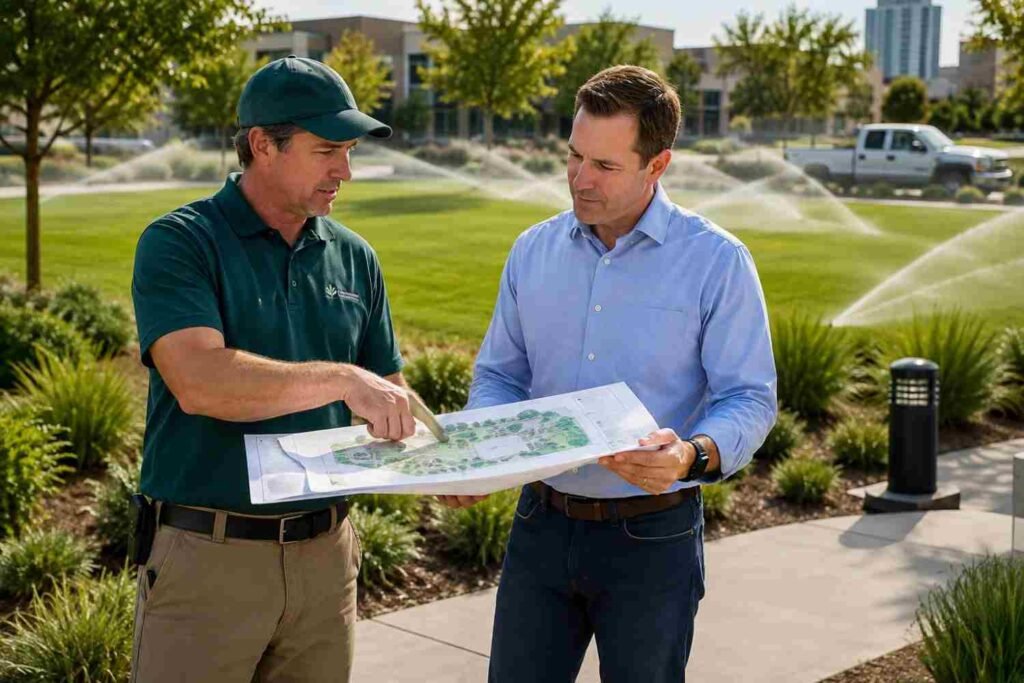
The best irrigation outcomes usually come from teams that understand both the technical and operational sides of water management. A good partner should be able to assess site conditions, think in hydraulic terms, and design for long-term function rather than short-term convenience.
Colorado Outdoor Environments brings that combination of field experience and professional credibility. With more than 30 years of work in Colorado and over 90 years of combined education and experience across the team, the company is positioned to handle the complexity of large landscape irrigation with discipline. That matters because these systems are not built for one season; they are built to perform through changing conditions, evolving plant material, and ongoing operational demands.
When evaluating a partner, smart operators tend to look for more than a service list. They look for evidence of:
- Site-specific design capability
- Experience with large and varied properties
- Knowledge of pressure, flow, and water availability constraints
- Familiarity with smart irrigation controls and monitoring
- Construction oversight and long-term system thinking
- Professional involvement in the irrigation field
Colorado Outdoor Environments checks those boxes in a way that aligns with the realities of large-scale water management. For a closer look at how that approach translates into practice, their irrigation design services page is a useful reference point.
A Better Irrigation System Is Built On Precision, Not Assumption
The core lesson is simple: large landscapes waste water when the system treats them like they are uniform. Smart irrigation design reduces that waste by acknowledging variation, engineering around it, and using technology to keep the system accountable over time.
That is why the most effective systems are rarely the most complicated ones. They are the most intentional ones. They match zones carefully, manage pressure intelligently, and give operators the visibility they need to intervene early. In other words, they replace assumption with control.
For properties where water efficiency, landscape health, and operational reliability all matter, that shift is significant. Colorado Outdoor Environments builds around that philosophy, combining design, consulting, and oversight so the finished system is not just installed correctly, but prepared to perform intelligently for the long term.