
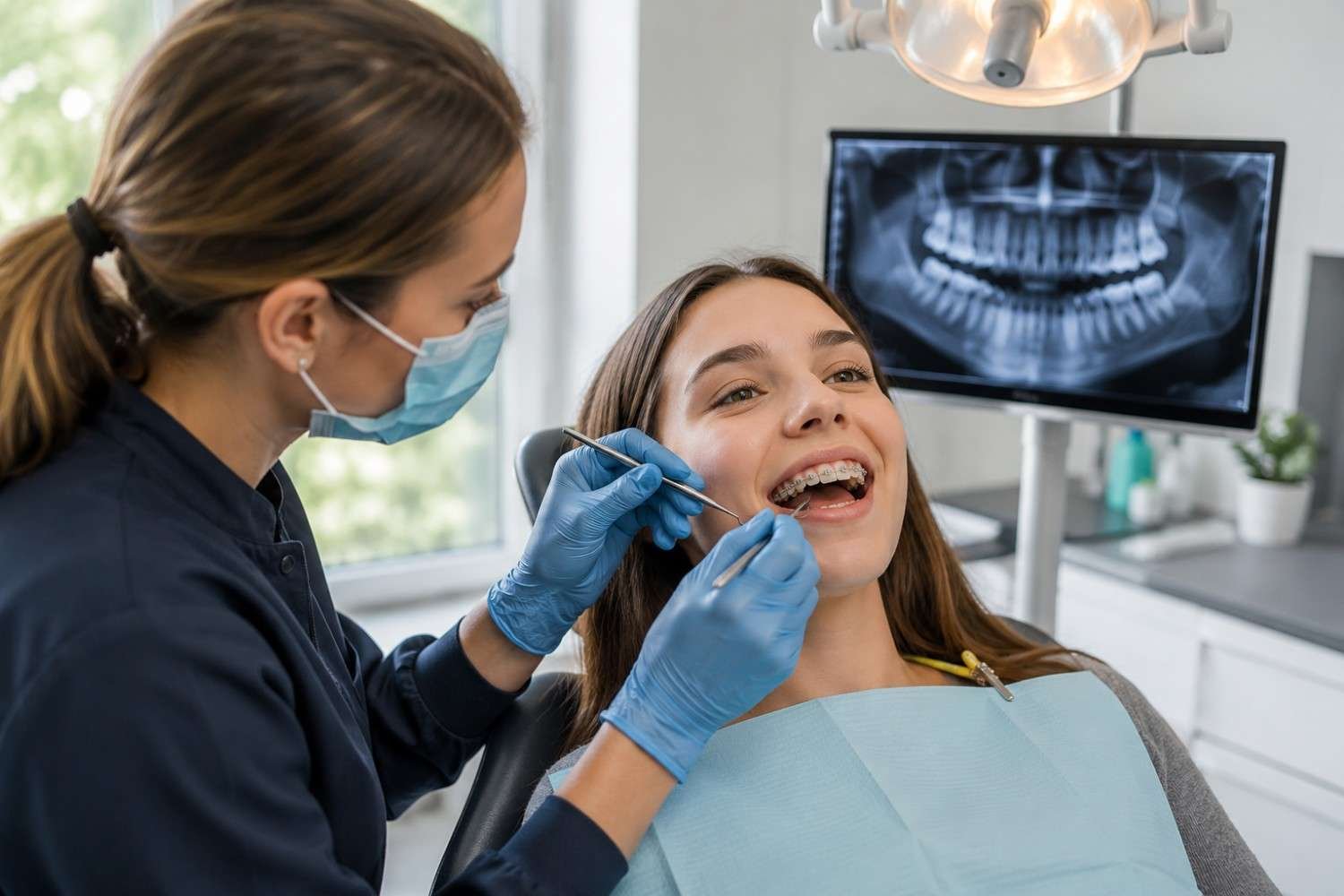
Orthodontics is fundamentally based on a controlled biological process that occurs when sustained pressure is applied to teeth. This process is called bone remodeling. When an orthodontic appliance, such as braces or clear aligners, places continuous force on a tooth, it triggers cellular changes in the surrounding alveolar bone. On the side of the tooth where pressure is applied, specialized cells called osteoclasts break down the existing bone.
This creates a small space, allowing the tooth to move into the desired position. On the opposite side, where tension is created, osteoblasts deposit new bone tissue. This cycle of resorption and deposition is continuous, gradually stabilizing the tooth in its new alignment. The speed and success of treatment depend entirely on stimulating this healthy, predictable biological response.
The Mechanics of Force Delivery
Modern orthodontic appliances are engineered systems designed to deliver precise, gentle forces over time. The concept of using light, constant pressure is crucial; excessive force can damage the root or interrupt the necessary blood supply, hindering movement rather than accelerating it.
Traditional Fixed Appliances
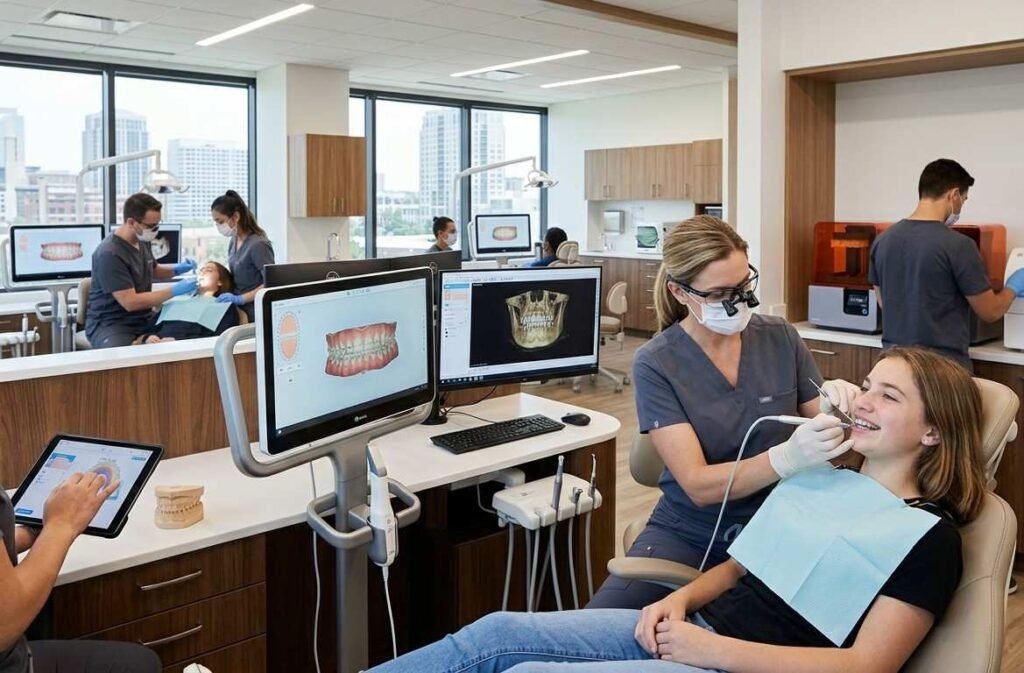
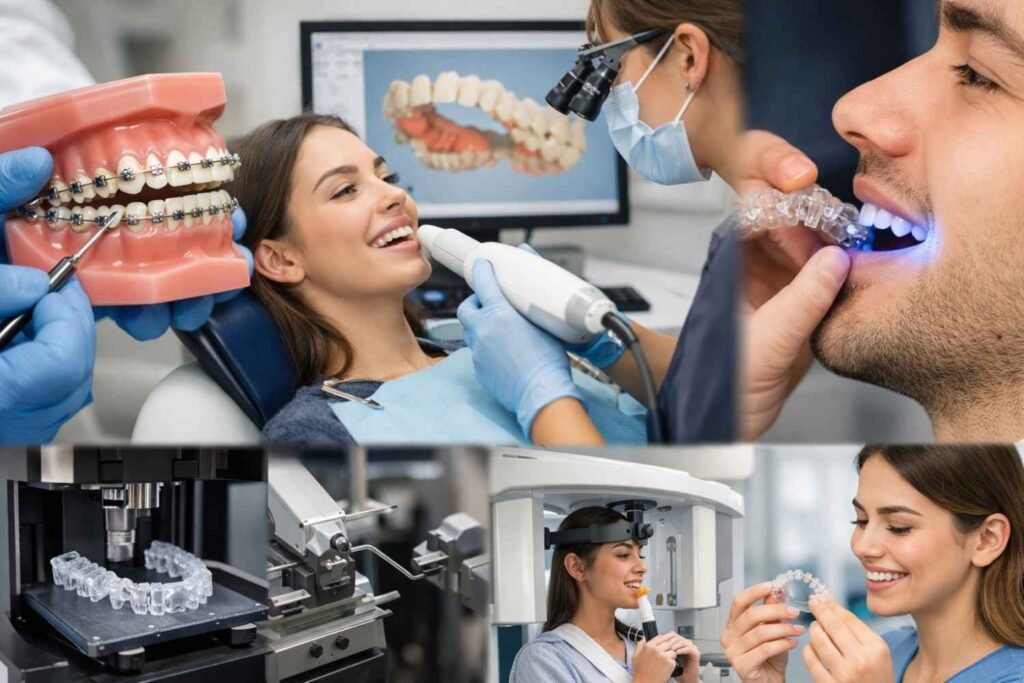
Traditional fixed braces consist of three primary components: brackets, archwires, and ligatures. Brackets are small attachments bonded to the front surface of each tooth. They act as handles. The archwire, a thin metal wire, is threaded through the slots in these brackets. This wire is the active component, exerting the primary force. Ligatures (small elastic or metal ties) secure the wire into the bracket slots.
The shape of the archwire is what the orthodontist wants the final dental arch to look like; as the teeth respond, they follow this template. Modern wires are often made of nickel-titanium alloy, a material chosen for its shape memory properties, which allows it to maintain a consistent, light force even as the teeth begin to shift.
Clear Aligner Systems
Alternatively, clear aligner therapy uses a series of custom-made, transparent trays. Each aligner tray is designed to achieve a specific minor movement before being replaced by the next one in the sequence. These trays fit snugly over the dental arch, applying pressure points to push teeth into alignment.
The planning phase for aligners involves sophisticated 3D imaging and computer-aided design (CAD) software, which maps the entire treatment from start to finish, calculating the exact tooth movements needed for each stage. This digital foresight allows for a highly personalized and predictable treatment trajectory. This meticulous approach to planning is a core component of effective cosmetic dentistry in Wasilla and across the globe.
Addressing Complex Malocclusions
Orthodontics treats more than just aesthetic concerns; it corrects functional issues known as malocclusions (bad bites). These problems include overbites, underbites, crossbites, and open bites, all of which can impact chewing efficiency, speech, and jaw joint health.
Ancillary Devices and Adjunctive Therapy
For severe skeletal discrepancies, orthodontic treatment may incorporate ancillary devices. These can include headgear (used primarily to modify jaw growth in younger patients), temporary anchorage devices (TADs), or specialized springs and elastics. TADs are small screws temporarily inserted into the bone to provide a stable, immovable point of reference, allowing for specific, targeted tooth movement that might otherwise be impossible.
Elastics, often worn between the upper and lower teeth, apply inter-arch forces to correct the way the top and bottom jaws meet. These tools ensure the treatment plan addresses the underlying skeletal structure, not just the position of the individual teeth.
The Retention Phase: Securing the Results
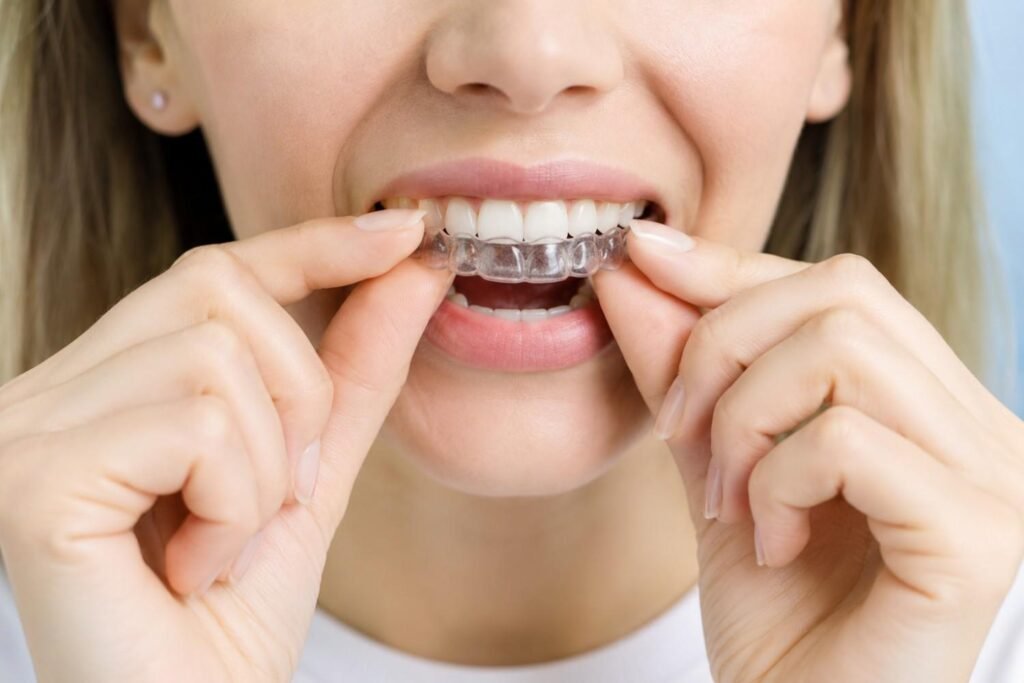
Once the teeth reach their final, desired positions, the active movement phase ends. However, the bone remodeling process requires time to solidify the new positions. This is where the retention phase becomes critical. Without retention, the teeth have a high tendency to shift back toward their original locations, a phenomenon known as relapse.