
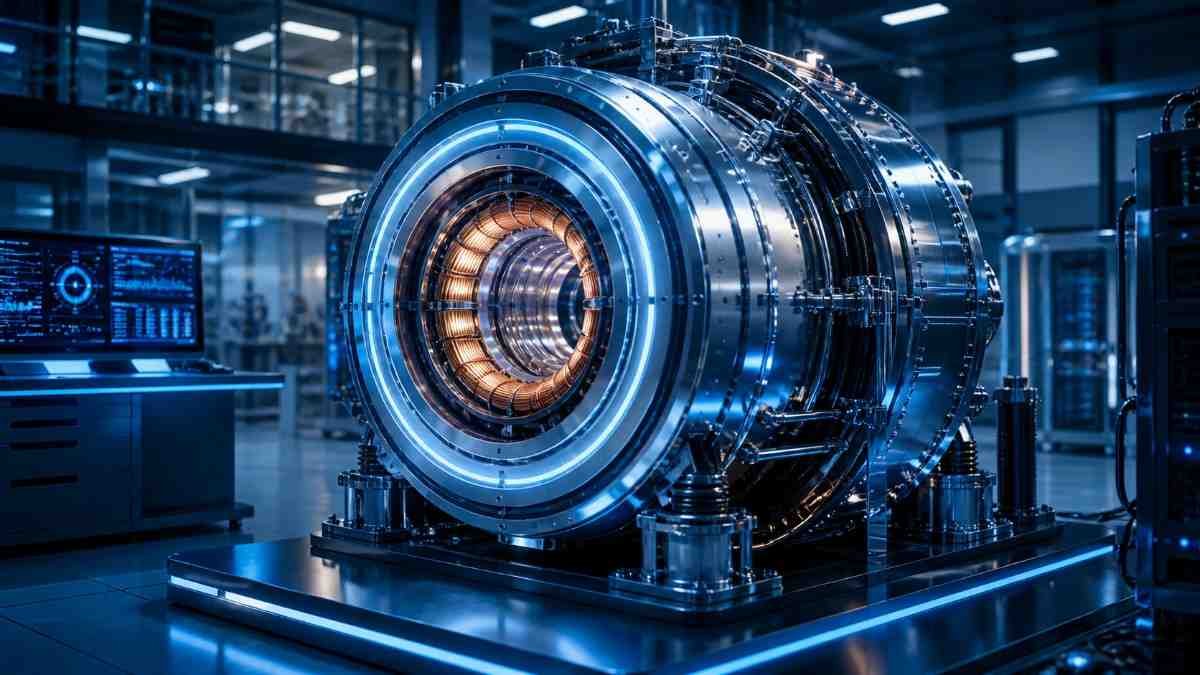
Extreme cold has long been an enemy of life, but near-absolute zero temperatures are unlocking incredible possibilities. Cryogenics, the science of temperatures below -150°C, causes materials to behave in strange ways—gases liquefy, and metals lose electrical resistance. This guide explores how cryogenics evolved from a niche curiosity into a driver of quantum computing, space travel, and modern medicine.
The Science of Extreme Cold
To appreciate where this field is heading, we need to understand its foundations and how it currently operates within scientific disciplines.
A Brief History of Freezing
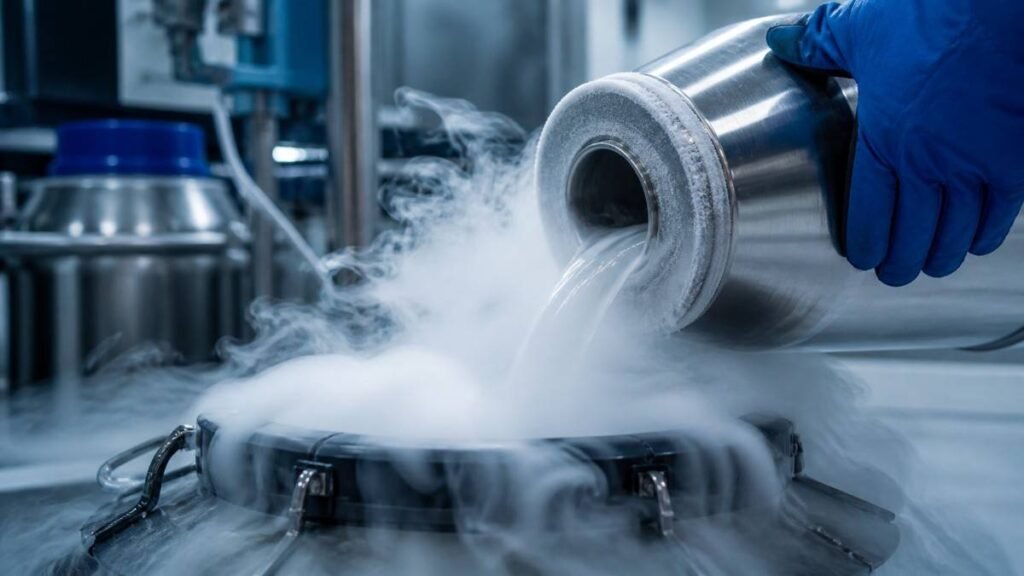
The story of cryogenics began in the late 19th century when scientists first successfully liquefied permanent gases like oxygen and nitrogen. This required pushing temperatures down to levels never naturally recorded on Earth.
Over the next few decades, researchers raced to reach absolute zero (-273.15°C), the theoretical limit where all atomic motion stops. While absolute zero remains impossible to reach perfectly, getting remarkably close has opened entirely new branches of study.
Revolutionizing Modern Medicine
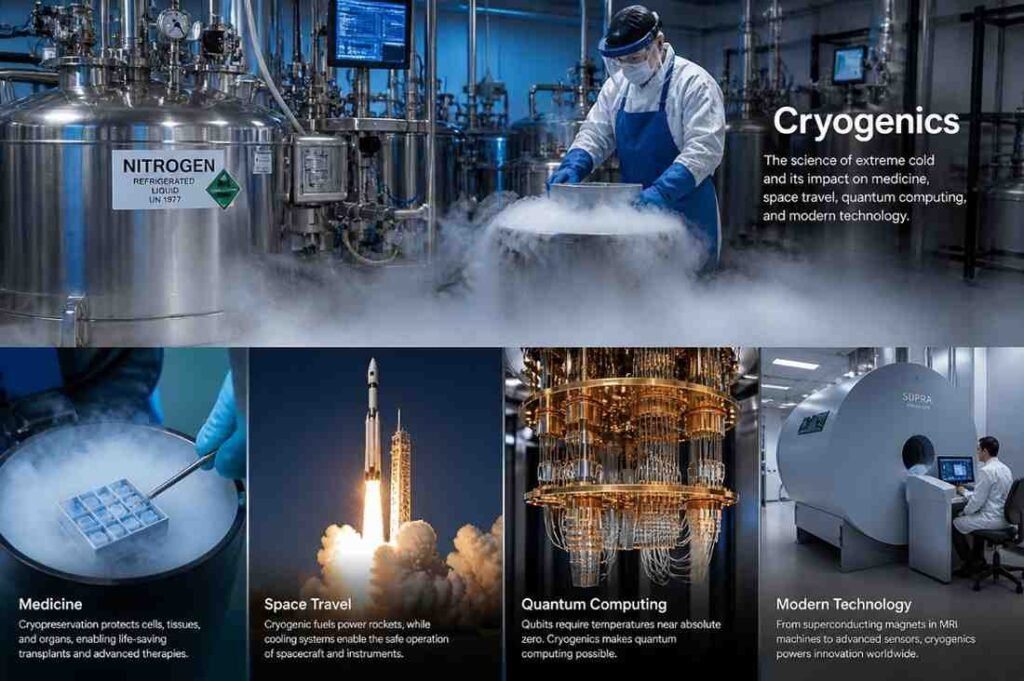
One of the most immediate benefits of ultra-low temperatures is the ability to hit the pause button on biological decay. Cryopreservation allows doctors to freeze cells, tissues, and even embryos for years without damage.
When a hospital needs to store vital stem cells or delicate vaccines, they rely on a liquid nitrogen freezer to keep the biological materials perfectly preserved. This technology has transformed fertility treatments and holds immense promise for the future of organ transplants.
Breakthroughs in Physics and Materials
When certain metals get cold enough, they become superconductors. This means they can conduct electricity with absolutely zero resistance. Superconductivity is the magic behind the powerful electromagnets used in MRI machines at your local hospital.
Researchers are constantly looking for ways to manufacture new superconducting materials, which could eventually lead to perfectly efficient power grids.
Propelling Space Exploration
Leaving Earth’s atmosphere requires a massive amount of energy. NASA and other space agencies use cryo-propulsion to get heavy rockets off the launch pad. By chilling gases like hydrogen and oxygen until they become liquids, engineers can pack significantly more fuel into a rocket’s tanks. This high-density, super-cold fuel provides the explosive thrust necessary to send satellites to orbit and rovers to Mars.
Technological Marvels Born from the Cold
The laboratory is not the only place where extreme cold proves useful. Commercial technology relies heavily on these principles to keep the modern economy running smoothly.
Upgrading Industrial Processes
The food industry uses cryogenic freezing to lock in the flavor and nutritional value of perishable goods. Flash-freezing berries or seafood prevents large ice crystals from forming, which would otherwise destroy the cellular structure of the food.
In heavy manufacturing, engineers use cryogenic treatments to harden steel and other metals, significantly extending the lifespan of industrial cutting tools and engine parts. It requires motion control for industry operations.
Powering the Next Generation of Computers
Standard computers process information using bits, represented as ones and zeros. Quantum computers use qubits, which can exist in multiple states at once.
However, qubits are incredibly fragile and will lose their quantum state if exposed to the slightest heat or magnetic interference. To solve this, tech giants build massive dilution refrigerators to cool quantum processors to temperatures colder than deep space.
Energizing the Global Economy
Natural gas is a vital energy source for heating homes and generating electricity. Transporting it across oceans via pipeline is often impossible. The solution is Liquefied Natural Gas (LNG). By cooling the gas to -162°C, it condenses into a liquid that takes up 600 times less space. Massive tanker ships can then transport this dense energy source to entirely different continents safely and efficiently.
Navigating the Ethics and the Unknown
With any powerful technology comes a unique set of challenges and ethical debates that society must navigate.
Societal Impacts and Ethical Debates
The most public and controversial aspect of this field is cryonics. This is the practice of freezing a deceased human body with the hope that future medical science can revive them. Cryonics operates largely outside mainstream science and raises profound ethical questions about resource allocation, the definition of death, and the false selling of hope to vulnerable families.
Predictions for the Decades Ahead
Mainstream scientists are focused on much more grounded goals. A major target is developing methods to successfully freeze and thaw entire human organs. Currently, a donor heart is only viable for a few hours. If researchers can perfect cryogenic organ preservation, global waiting lists for transplants could be drastically reduced.
Conclusion
The study of extreme cold is quietly powering some of our most advanced modern achievements. From the super-chilled fuel that launches our astronauts to the quantum processors that will define the next century of computing, cryogenics is an indispensable pillar of innovation.