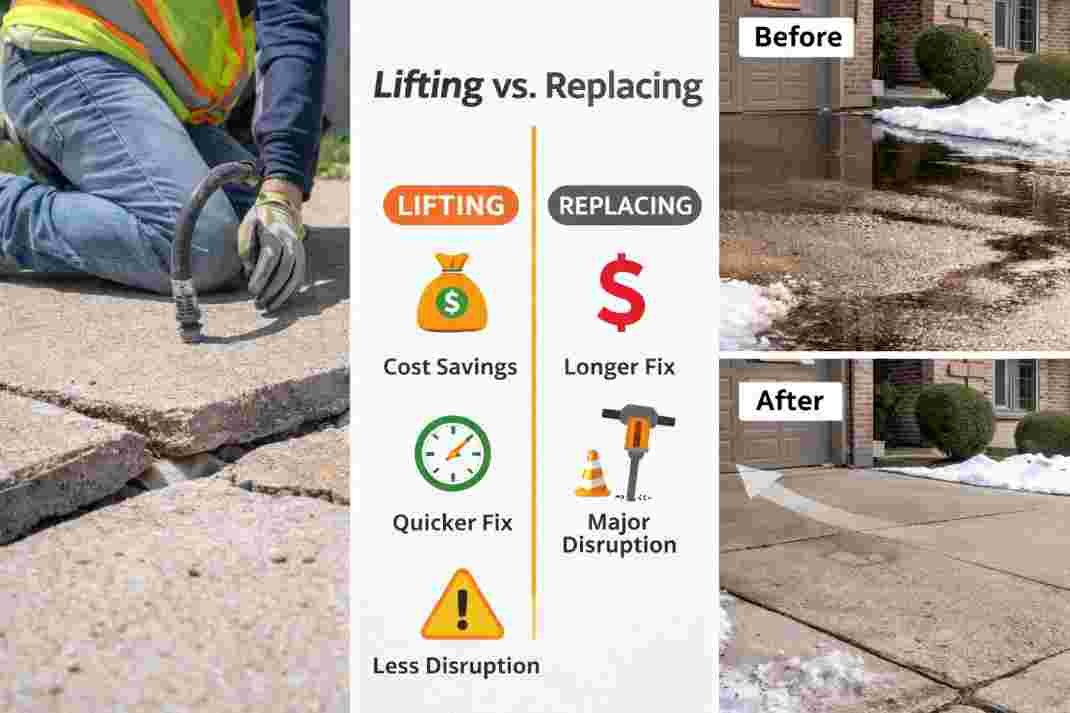
Concrete is strong and durable, but it can still shift, crack, or sink over time. When faced with uneven sidewalks, sunken driveways, or cracked patios, many property owners assume replacement is their only option. However, lifting the existing concrete is often a more efficient and affordable solution.
Understanding when to lift instead of replace can save you time, money, and hassle. For many, concrete lifting services in Salt Lake City offer a practical alternative to a full tear-out and repour.
What Causes Concrete to Sink or Settle?
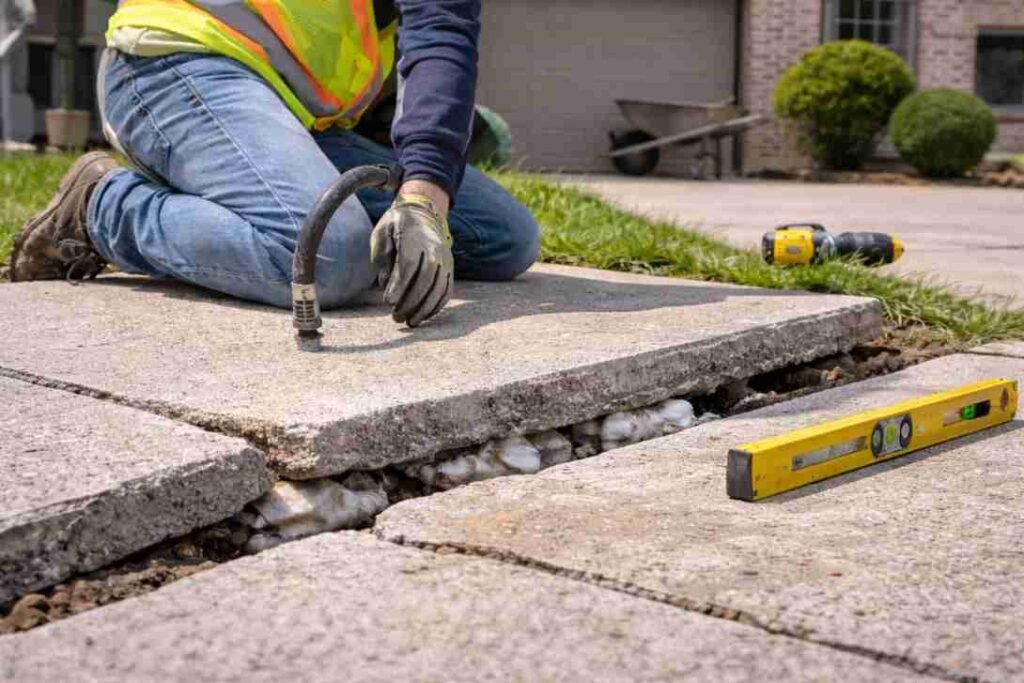
Concrete rarely fails on its own; most problems start with the soil beneath it. Issues like soil movement, erosion, and moisture changes often cause slabs to sink. As temperatures shift with the seasons, soil expands and contracts. If the ground shifts or washes away, it creates voids. Lacking proper support, the concrete will then start to sink or tilt.
Common causes include:
- Poor soil compaction during initial installation
- Water erosion processes from improper drainage
- Freeze-thaw cycles
- Heavy loads placed on unsupported soil
Addressing the root cause is essential. When the slab itself is still structurally sound, lifting is often the smarter choice.
Signs You Should Consider Concrete Lifting
Not all damaged concrete needs full replacement. In fact, many situations are ideal for lifting. Below signs suggests you when to repair:
1. The Slab Is Intact but Uneven
If your driveway, sidewalk, or patio has sunk but remains mostly intact, lifting is usually effective. Minor cracks are acceptable, but the slab should not be severely broken into multiple pieces. Lifting restores the surface to its original level without the need to tear everything out.
2. There Are Trip Hazards
Uneven walkways create safety concerns for family members, visitors, and customers. When one section of concrete sits higher or lower than the next, lifting can quickly eliminate the hazard. This approach helps maintain safety while preserving the existing structure.
3. Drainage Problems Are Caused by Settling
Sinking concrete often changes the slope of a surface. Water may begin pooling near foundations or flowing toward structures instead of away from them. Lifting re-establishes proper grading and improves drainage without a full replacement project.
4. You Want a Faster, Less Disruptive Fix
Replacement requires demolition, removal, re-pouring, and curing time. This process can take days or even weeks. Concrete lifting is typically completed much faster. Surfaces are often ready for use shortly after the procedure is finished. This makes it an appealing option for busy homeowners and commercial properties.
When Replacement May Be Necessary
While lifting is highly effective, it is not suitable for every situation.
Replacement may be required when:
- Concrete is severely cracked or crumbling
- Large sections are broken into multiple unstable pieces
- The slab was poorly installed and lacks structural integrity
- There is extensive surface damage beyond simple settling
If the concrete has lost strength, lifting won’t restore durability, and replacement is the better long-term solution. Carefully evaluating the slab’s condition ensures the right approach.
Benefits of Lifting Over Replacing
Choosing lifting over replacement provides several advantages.
Cost Savings
Lifting generally costs less than full replacement. There is no need for demolition, hauling debris, or purchasing large amounts of new concrete. This makes it a budget-friendly option for many property owners.
Time Efficiency
Replacement projects require curing time before the surface can be used again. Lifting avoids this extended downtime. For driveways, sidewalks, and commercial spaces, this faster turnaround is especially valuable.
Environmentally Responsible Option
Reusing existing concrete reduces waste. Instead of sending broken slabs to landfills, lifting preserves the material already in place. This approach minimizes environmental impact while still delivering strong results.
Long-Term Stability
Modern lifting techniques fill voids beneath the slab and restore proper support. When the underlying soil issues are addressed, the results can last for many years. This makes lifting a durable solution when conditions are right.
Why This Matters
Concrete settling is a common issue due to climate and soil conditions. Freeze-thaw cycles, snowmelt, and irrigation can cause soil to shift, leading to uneven surfaces. For many property owners, concrete lifting offers an effective solution tailored to these challenges.
Rather than replacing the concrete, lifting corrects uneven areas while preserving your investment. This process enhances curb appeal, protects property value, and reduces liability risks by maintaining safe, level surfaces.
Conclusion
Deciding between lifting or replacing a concrete slab depends on its condition and the cause of the damage. If the slab is structurally sound and the problem is due to soil movement, lifting is often the smarter and more cost-effective option.
It levels uneven surfaces, enhances safety, and restores proper drainage without the expense and mess of demolition. However, if the slab is severely damaged or deteriorating, replacement may provide better long-term results. A thorough inspection is essential to determine the best solution for your situation.
Knowing your options ensures a wise investment and durable, safe concrete surfaces for years to come.