
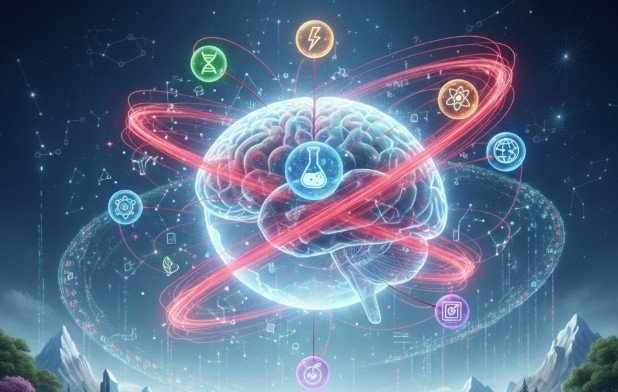
In the digital age, science education and communication are no longer confined to textbooks or laboratories. Platforms that combine accessibility, interdisciplinary thinking, and modern presentation styles are reshaping how people learn and engage with scientific knowledge. RedWebZine Integrated Science represents this evolving landscape by blending multiple scientific disciplines into a unified, reader-friendly format that appeals to students, educators, and curious minds alike.
This article explores what RedWebZine Integrated Science represents, how integrated science works, and why such platforms are becoming increasingly important in today’s knowledge-driven world.
Understanding Integrated Science
Integrated science is an educational and informational approach that merges traditionally separate scientific fields—such as biology, chemistry, physics, environmental science, and health sciences—into a cohesive learning framework. Instead of studying each subject in isolation, integrated science emphasizes connections, real-world applications, and systems thinking.
For example:
- Climate change cannot be fully understood without physics (energy transfer), chemistry (greenhouse gases), biology (ecosystem impact), and environmental science (human interaction).
- Human health integrates biology, chemistry, physics, and medical sciences.
RedWebZine Integrated Science builds on this philosophy by presenting science as an interconnected web rather than a collection of disconnected facts.
What Is RedWebZine Integrated Science?
RedWebZine Integrated Science can be described as a digital knowledge platform or online magazine that focuses on interdisciplinary scientific content. The term “zine” suggests a modern, web-based publication style—visually engaging, concise when needed, but capable of deep exploration.
Key characteristics include:
- Cross-disciplinary articles that connect multiple scientific fields
- Accessible language designed for non-experts as well as learners
- Visual storytelling through diagrams, infographics, and illustrations
- Real-world relevance, linking science to everyday life
Rather than targeting only academics, RedWebZine Integrated Science aims to make complex scientific ideas understandable and engaging for a broader audience.
Why Integrated Science Matters Today
1. Real-World Problems Are Interdisciplinary
Modern global challenges—pandemics, climate change, renewable energy, food security—cannot be solved by a single branch of science. Integrated science reflects how research and innovation actually occur in the real world.
2. Improved Learning and Retention
Studies in education show that learners grasp concepts more effectively when they understand relationships between ideas. Integrated science helps readers:
- See patterns across disciplines
- Apply knowledge to practical situations
- Develop critical thinking skills
3. Encouraging Scientific Literacy
Platforms like RedWebZine Integrated Science play a key role in improving public scientific literacy. By presenting science in relatable contexts, they help readers make informed decisions about health, technology, and the environment.
Core Topics Covered by RedWebZine Integrated Science
1. Life Sciences
Articles may explore how biological systems interact with chemical processes and physical laws. Topics often include:
- Human physiology
- Genetics and evolution
- Microbiology and disease
2. Physical Sciences
Physics and chemistry are presented not as abstract theories but as forces shaping the natural world:
- Energy systems
- Matter and reactions
- Space and time concepts
3. Environmental and Earth Sciences
Environmental topics are central to integrated science:
- Climate systems
- Ecosystem balance
- Sustainability and conservation
4. Health and Applied Sciences
Health science content bridges biology, chemistry, and technology:
- Nutrition and metabolism
- Medical innovations
- Public health awareness
Digital Presentation and User Experience
One of the defining strengths of RedWebZine Integrated Science lies in its digital-first approach. Unlike traditional academic journals, it prioritizes readability and engagement.
Notable features include:
- Clean layouts that reduce cognitive overload
- Illustrations and charts to explain complex ideas
- Short sections and headings for easy navigation
- Mobile-friendly design for modern readers
This approach ensures that readers can explore scientific topics without feeling overwhelmed.
Who Benefits from RedWebZine Integrated Science?
Students
- Gain a holistic understanding of science
- Supplement classroom learning
- Prepare for interdisciplinary exams and projects
Educators
- Find inspiration for integrated lesson plans
- Use articles as discussion starters
- Encourage systems thinking
General Readers
- Stay informed about scientific developments
- Understand science-related news more clearly
- Build curiosity and lifelong learning habits
The Role of Integrated Science in the Future
As technology advances, scientific fields continue to overlap. Artificial intelligence, biotechnology, and environmental engineering all rely on integrated knowledge. Platforms like RedWebZine Integrated Science are well-positioned to support this future by:
- Promoting interdisciplinary awareness
- Encouraging ethical and informed decision-making
- Supporting innovation through knowledge synthesis
In the coming years, integrated science platforms may become essential resources not only for education but also for public policy understanding and global collaboration.
Challenges and Considerations
While integrated science offers many benefits, it also presents challenges:
- Balancing depth with accessibility
- Avoiding oversimplification of complex topics
- Ensuring accuracy across multiple disciplines
A strong editorial approach and expert-reviewed content are essential to maintaining credibility and trust.
Conclusion
RedWebZine Integrated Science reflects a modern approach to scientific communication—one that values connection over compartmentalization. By presenting science as an interconnected system, it helps readers better understand the world around them and their place within it.
In an era where scientific knowledge influences nearly every aspect of life, integrated science platforms are not just educational tools—they are bridges between knowledge, understanding, and action.