
If you’ve been Googling how to start an atm business, you’ve probably seen big income claims and confusing jargon about MSBs, ISOs, and vault cash. This guide cuts through the noise and gives you a practical, US-focused roadmap from idea to your first live machine.
Independent ATM deployers (non-bank owners) now operate more than half of all ATMs in the United States, with an estimated 520,000–540,000 machines nationwide. That means there’s still room for small operators who pick good locations and run their routes professionally.
Is an ATM Business Still Worth It Today?
Despite more digital payments, ATMs continue to play a vital role in cash access, especially in bars, convenience stores, small retailers, and lower-income or cash-heavy areas.
Out-of-network ATM fees in 2025 now average about $4.86 per withdrawal, including a typical surcharge of around $3.22 from the ATM operator. A portion of that surcharge is what you earn on each transaction, often shared with the business where your machine sits.
Bottom line: the ATM business is not “get rich overnight,” but with a few good locations, it can be a solid, systemized cash-flow play.
How to Start an ATM Business: Step-by-Step Roadmap
Step 1 – Understand the ATM Business Model
Before you spend a dollar, get clear on how the money flows:
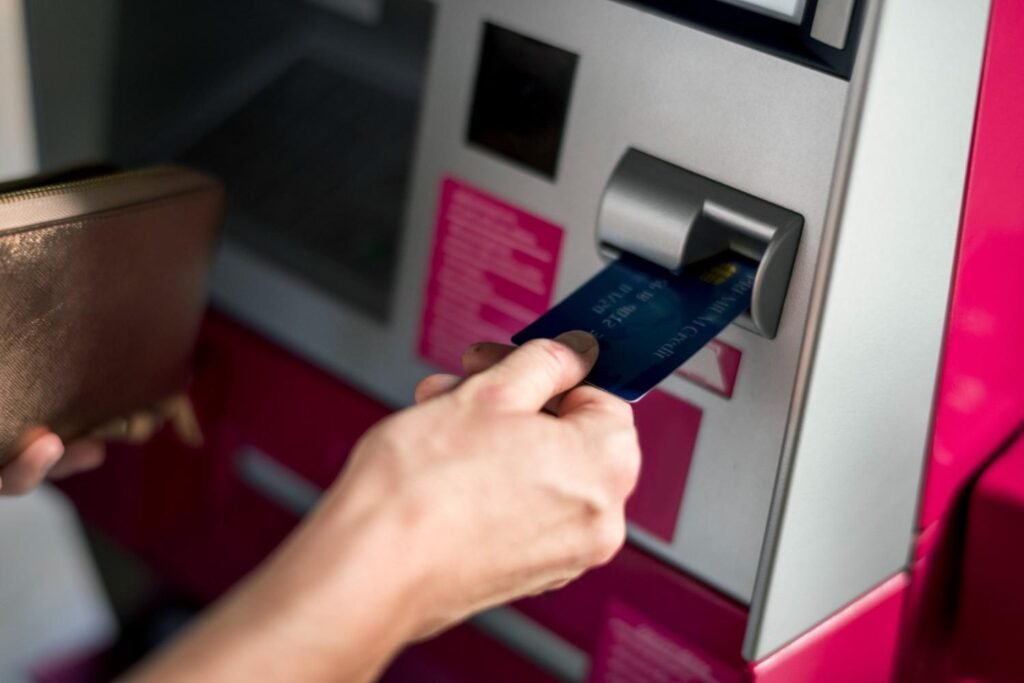
- A customer uses your ATM to withdraw cash.
- The customer pays a surcharge fee (for example, $2.50–$3.50).
- You, the ATM owner, receive most or all of that surcharge, minus small network/processing fees.
Often, you also share part of that surcharge with the location owner (e.g., convenience store, bar, or laundromat) as a commission for hosting your ATM.
Your job as an independent ATM deployer is to:
- Own or place the machine
- Keep it stocked with cash
- Monitor performance and handle service issues
- Maintain relationships with locations and your processor/ISO
Step 2 – Run the Numbers and Set Your Startup Budget
A realistic roadmap starts with realistic numbers.
Recent pricing data shows that basic retail ATMs typically cost around $2,000–$5,000 new, while more advanced or lobby-style units can range from $8,000 to $14,000+. Refurbished machines can be cheaper but may look dated or lack modern security features.
Budget for:
- ATM purchase or lease
- Installation ($300–$500 in many cases)
- Initial vault cash (often $2,000–$8,000 per machine, depending on traffic)
- Insurance, signage, and possibly an armored car service if you don’t self-load
Then run simple scenarios:
- Estimated transactions per month (e.g., 200–400 in a strong location)
- Average surcharge (e.g., $3.00)
- Less any commission to the location (e.g., $0.75–$1.00 per transaction)
That gives you a rough monthly profit and payback period on your machine.
Step 3 – Choose a Legal Structure and Handle Basic Compliance
Most small ATM operators form an LLC for liability protection and tax flexibility, then:
- Get an EIN from the IRS
- Open a business bank account
- Keep business and personal finances separate
The regulatory picture depends on your exact setup:
- Independent ATM owners that only allow withdrawals and balance inquiries (no deposits, no money transfer) are generally not treated as Money Services Businesses (MSBs) under the Bank Secrecy Act, and thus are not required to maintain full MSB AML programs.
- Many MSBs must register with FinCEN using Form 107 within 180 days of starting, unless they are only an agent of another MSB.
Because details matter and rules can change, always:
- Talk to a small-business attorney familiar with financial services
- Confirm whether your specific model triggers MSB registration or state licensing
- Expect your bank to perform due diligence on you as an independent ATM operator under their BSA/AML obligations.
Nothing here is legal advice—consider it your checklist for professionals to review.
Step 4 – Partner With a Processor/ISO and Select Your ATM
You can’t run an ATM in isolation. You’ll typically work with:
- A processor/ISO that connects your ATM to the banking networks
- A sponsor bank
- A hardware vendor (sometimes the same company as your ISO)
Compare providers on:
- Network uptime and support
- Per-transaction fees
- Reporting dashboard and remote monitoring features
- Help with programming, EMV/PCI compliance, and software updates

Choose an ATM model that is EMV-compliant, ADA-compliant, and appropriate for your setting (through-the-wall vs. lobby unit, receipt options, touchscreen, etc.).
Step 5 – Find High-Traffic Locations and Negotiate Placement Deals
Location is the make-or-break factor in this business. Strong candidates include:
- Convenience stores and gas stations
- Bars, nightclubs, and cash-only venues
- Laundromats and car washes
- Tourist areas, event venues, and campuses
When you pitch a business owner, focus on:
- Increased sales from customers having cash on site
- A cut of the surcharge or a fixed monthly fee
- No equipment cost or hassle for them if you handle everything
Many independent ATM deployers structure deals as either:
- A surcharge split (e.g., 50/50 or a fixed per-transaction amount), or
- A flat monthly commission if volumes justify it
Track performance and be willing to move underperforming machines.
Step 6 – Set Up Cash Logistics, Security, and Monitoring
You have two main options for vault cash:
- Self-loading – You use your own cash and physically refill the machine. This offers higher profit but requires strong security habits.
- Armored car / third-party cash loading – Lower risk and effort but more cost.
Protect your machines and cash by:
- Using secure anchoring and quality safes
- Installing cameras and good lighting in cooperation with the location owner
- Enabling remote monitoring to track cash levels, errors, and tampering
Consider business insurance and, where available, ATM-specific coverage.
Step 7 – Scale Into an ATM Route and Plan Your Exit
Once your first machine produces consistent, predictable profit, you can:
- Reinvest profits into additional ATMs
- Cluster machines in the same region to simplify loading
- Standardize contracts and processes so the business runs smoothly
Over time, some owners sell their ATM routes (a portfolio of machines and locations) as a lump-sum exit. A clean paper trail, solid contracts, and reliable performance all help maximize that valuation.
Frequently Asked Questions
1. How much money do I need to start an ATM business?
For a single machine, many new operators budget $5,000–$10,000 total. That usually covers the ATM itself (often $2,000–$5,000 for a standard retail unit), installation, initial vault cash, and basic setup costs. If you self-load, more of your budget must sit as cash inside the ATM. If you use an armored car service, your upfront cash can be lower but your ongoing expenses will be higher.
2. How much can one ATM make per month?
Earnings vary wildly by location. A strong placement might see 300+ transactions a month, while a weak one might see fewer than 50. If you charge a $3.00 surcharge and keep $2.00 after sharing with the location and paying fees, 300 transactions would gross about $600 per month before overhead. Low-traffic spots might earn only a fraction of that, so testing and relocation are key.
3. Do I need a license or MSB registration to own ATMs?
Many purely non-deposit, withdrawal-only ATM owners are not treated as MSBs under current FinCEN guidance, and thus are not required to implement full AML programs as MSBs. However, some business models and state laws can trigger MSB registration or other licensing. The IRS and FinCEN state that most MSBs must register electronically using FinCEN Form 107 within 180 days unless they are only acting as an agent of another MSB. Always confirm with a qualified attorney or compliance professional.
4. Is an ATM business really passive income?
It’s semi-passive at best. Once your machines and contracts are in place, daily operations can be light: remote monitoring, occasional refills, and occasional repair calls. But you still have to manage cash, visit locations, maintain relationships, and keep up with compliance and technology updates. For most owners, it functions as a small side business that can scale into a meaningful route if run systematically.
Final Verdict: Is Learning How to Start an ATM Business Right for You?
Ultimately, learning how to start an atm business is less about buying a machine and more about building a simple, repeatable system: good locations, clean contracts, reliable cash logistics, and basic compliance.
If you’re comfortable handling cash, negotiating with business owners, and thinking long-term rather than chasing overnight riches, an ATM route can be a practical way to add diversified income. Start with one well-researched machine, treat it like a real business from day one, and let your numbers—not hype—tell you when it’s time to scale.